

Historic Landmarks That Shaped Mumbai’s Identity
0
Table of Contents
Mumbai is not built in layers; it is built in stories. Some are carved in stone, others whispered through prayer halls, and many still echo through railway platforms and sea-facing forts. Every landmark here has shaped the city’s identity in its own way, turning it into a place where the past and present constantly intersect.
To explore monuments in Mumbai is to step into moments that still linger. If you are planning a trip to Mumbai anytime soon, you must include these places in your itinerary. But first, learn a bit more about these iconic places as curated by Taj Hotels!
Mumbai’s Landmarks at a Glance!
| Landmark | Era | What Defines It | Experience |
|---|---|---|---|
| Gateway of India | 1924 | Colonial arch by the sea | Sunrise views |
| Elephanta Caves | 5th-8th Century | Rock-cut sculptures | Ferry journey |
| Bandra Fort | 1640 | Coastal watchpoint | Sea link views |
| Global Vipassana Pagoda | 2008 | Meditation dome | Silence & stillness |
| CSMT | 1887 | Gothic architecture | City in motion |
| Siddhivinayak Temple | 1801 | Devotional landmark | Spiritual energy |
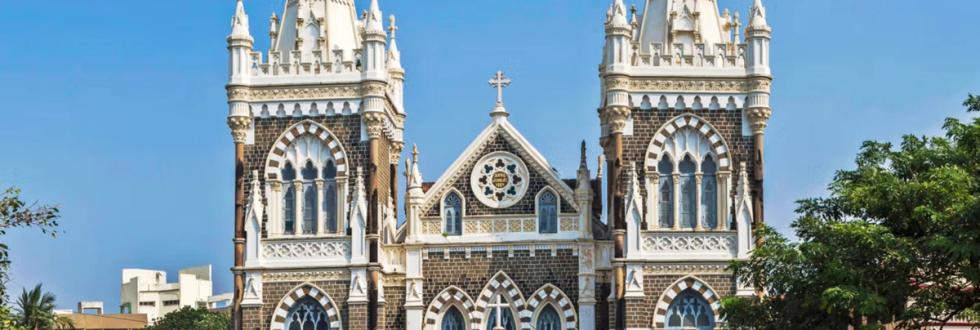
| Mount Mary Church | 16th Century | Basilica & fair | Faith & festivity |
Gateway of India: Where Mumbai Begins

Standing tall by the Arabian Sea, the Gateway of India has witnessed arrivals, departures and defining moments in India’s history. It is not just an architectural marvel; it is a symbolic threshold.
Right beside it stands the iconic Taj Mahal Tower, Mumbai, a hotel near the Gateway of India. It offers an experience where you wake up to views of the arch, walk out into the city’s most historic precinct and return to a space that has hosted dignitaries, artists and travellers for over a century.
For those who want to go deeper, the property also curates a heritage walk in Mumbai, offering insights into its corridors, design and legacy, making your stay more enriching
Elephanta Caves: Stories Etched in Stone
A ferry ride away from the city leads you to Elephanta Island, home to ancient cave temples carved into basalt rock. This historical monument in Mumbai reflects artistic brilliance and spiritual depth, with sculptures that have stood the test of time.
The journey itself is part of the experience; leaving behind the city’s rush and stepping into a quieter space.
Bandra Fort: Where the City Meets the Sea
Perched at the edge of Bandra, this 17th-century fort offers sweeping views of the Arabian Sea and the Bandra-Worli Sea Link. Once a strategic watchpoint, it is now a place where the city slows down, if only for a moment.
A short distance away, Taj Lands End, Mumbai, completes this experience. As a luxury hotel in Bandra West, offering expansive sea views, creating a stay that feels both connected to the city and away from the chaos.
Global Vipassana Pagoda: Silence Amidst Movement
Far from the city’s constant movement lies the Global Vipassana Pagoda. Its golden dome rises as a symbol of peace, inviting visitors into a space of meditation and introspection
This landmark represents a quieter side of Mumbai, often overlooked yet deeply essential.
Chhatrapati Shivaji Maharaj Terminus: A Living Legacy
A UNESCO World Heritage Site, CSMT is where architecture and everyday life converge. Its Victorian Gothic design stands in contrast to the fast-paced movement of trains and commuters. It is not a static structure; it breathes, moves and evolves with the city.
Sacred Spaces That Shape the City’s Soul
- Siddhivinayak Temple: One of the most revered temples in Mumbai, Siddhivinayak is where faith feels immediate and powerful. Devotees gather here daily, seeking blessings and finding comfort in its presence.
- Mount Mary Church: Overlooking the sea from Bandra Hill, this church offers a sense of calm and continuity. During the annual fair, it transforms into a vibrant celebration of faith and community.
Experiencing Mumbai Through Taj Hotel
Exploring Mumbai’s landmarks becomes more meaningful when paired with the right stay.
- Stay where history lives from the Taj Mahal Palace, Mumbai, overlooking the Gateway of India to Taj Lands End, Mumbai by the sea.
- Discover curated experiences, including guided walks and immersive storytelling
- Travel with ease with Taj Hotels in Mumbai, strategically located across the city
Staying at one of the 5-star hotels in Mumbai lets you explore the city comfortably, with easy access to its landmarks, history, and modern energy.
To Sum It Up
Mumbai’s landmarks are not just remnants of the past. They are active participants in the city’s present, shaping how it feels, moves and evolves with every passing day.
From sea-facing arches to sacred shrines and busy terminals, each space remains part of the city’s everyday rhythm, lived in and returned to over time.
To truly understand Mumbai, you must experience these landmarks not as checkpoints, but as stories in motion. Walk through them slowly. Stay close to them. And let the city astonish you by telling you one story at a time.
About Author
STORY THEMES

OUR BRANDS